

Interior Design Uses of Stone
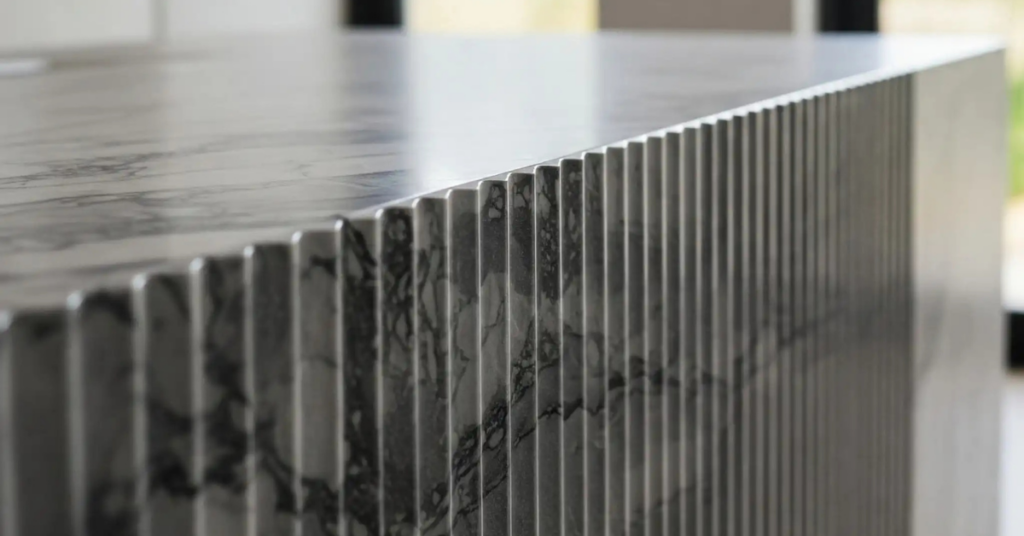
Stone has always been associated with permanence, craftsmanship, and luxury—but today’s interior design trends are redefining how stone is used throughout the home. No longer limited to standard countertops, natural and engineered stone now play a starring role in architectural details, sculptural features, and highly customized surfaces.
From fluted stone edges and bookmatched slabs to full-height stone kitchen hoods and integrated stone sinks, designers and homeowners are embracing stone as both a functional material and a design statement. In this guide, we explore the most influential interior design trends using stone—and how these applications elevate modern homes while maintaining long-term value.
Whether you’re planning a remodel, designing a new build, or simply gathering inspiration, this overview will help you understand how stone is being used creatively, thoughtfully, and beautifully in today’s interiors.
Stone as a Design Language, Not Just a Surface
In contemporary interiors, stone is no longer treated as a background material. Designers now approach stone as a design language—one that adds texture, rhythm, contrast, and visual weight to a space.
Instead of blending quietly into cabinetry and finishes, stone is intentionally highlighted through:
- Sculptural edges and profiles
- Vertical applications beyond countertops
- Continuous slab installations
- Tactile finishes that invite touch
This shift reflects a broader trend toward material honesty—where the beauty of natural veining, mineral variation, and texture is celebrated rather than concealed.
Fluted Stone Edges: Texture Meets Sophistication
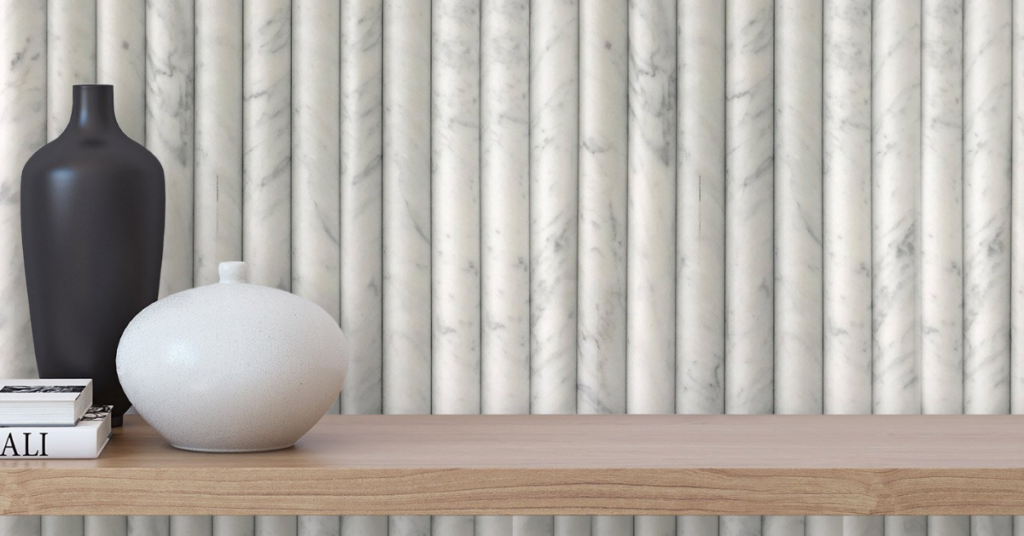
One of the most striking trends in stone design is the rise of fluted edges. Inspired by classical architecture and modern European interiors, fluting introduces vertical grooves into stone surfaces, creating rhythm and depth.
Where Fluted Stone Is Used
- Kitchen islands (especially waterfall ends)
- Bar fronts and beverage stations
- Bathroom vanity panels
- Custom furniture pieces and consoles
Why Designers Love It
Fluted stone adds movement without overwhelming a space. It softens the mass of stone while maintaining a high-end, tailored look. In minimalist kitchens, fluted edges provide just enough visual interest to keep the design from feeling flat.
Best Materials for Fluting
- Quartz (for consistency and durability)
- Granite with subtle patterning
- Quartzite for luxury applications
- Fluted stone pairs beautifully with flat-panel cabinetry, warm wood tones, and understated hardware—making it a favorite in transitional and modern interiors.
Statement Kitchen Hoods Wrapped in Stone
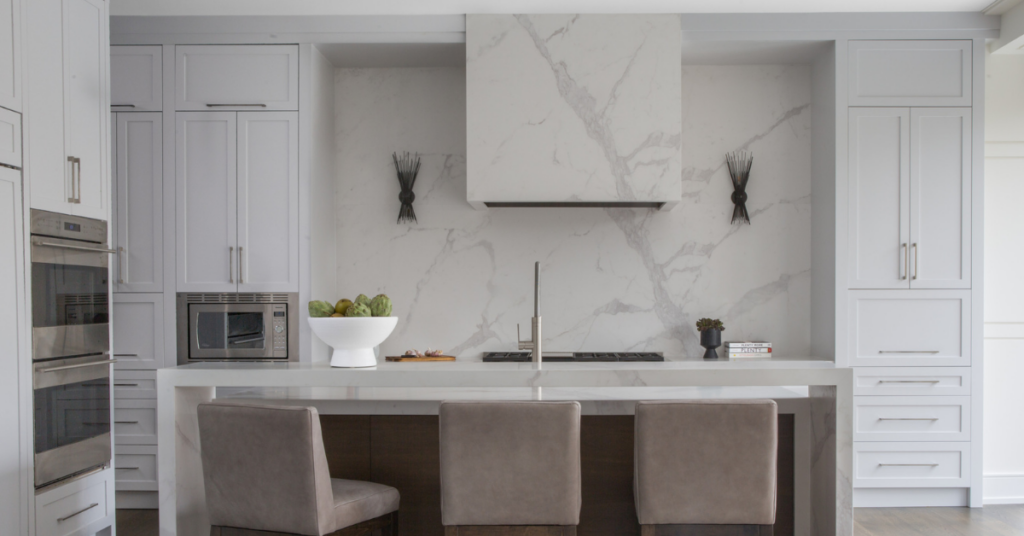
Kitchen hoods are no longer something designers try to hide. Instead, they’ve become architectural focal points, especially when wrapped in stone.
Why Stone Kitchen Hoods Are Trending
- They visually anchor the kitchen
- They replace bulky stainless steel with warmth and elegance
- They create continuity between countertops, backsplash, and vertical surfaces
Popular Stone Hood Styles
- Full slab hoods matching the countertop
- Bookmatched stone hoods for dramatic symmetry
- Honed or leathered finishes for softness
- Minimalist box-style hoods for modern kitchens
Stone hoods work especially well in open-concept kitchens, where the hood is visible from adjacent living areas. The result is a kitchen that feels curated and cohesive rather than purely utilitarian.
Integrated Stone Sinks: Seamless and Sculptural
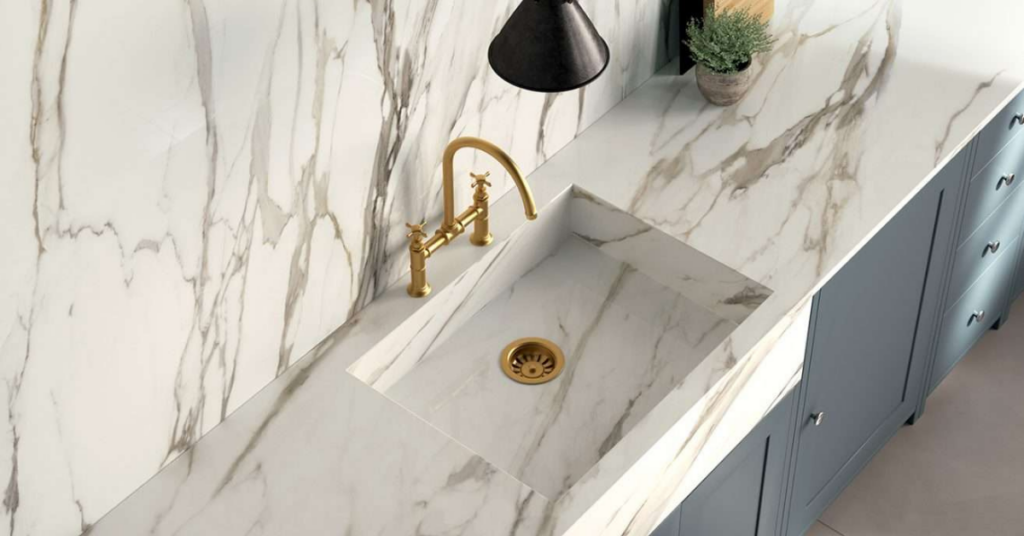
Integrated sinks—carved directly from the same stone as the countertop—are becoming a hallmark of high-end, custom interiors.
Where Integrated Stone Sinks Shine
- Primary bathrooms
- Powder rooms
- Luxury kitchens
- Bar and prep areas
Design Benefits
- No visible seams
- Elevated, custom-crafted aesthetic
- Easy cleaning (no rim or caulk line)
Practical Considerations
Integrated sinks are typically paired with:
- Quartz or solid-surface stone for consistency
- Honed or matte finishes to reduce water spotting
- Wall-mounted or deck-mounted faucets
In bathrooms, integrated stone sinks contribute to a spa-like atmosphere. In kitchens, they signal a commitment to craftsmanship and detail.
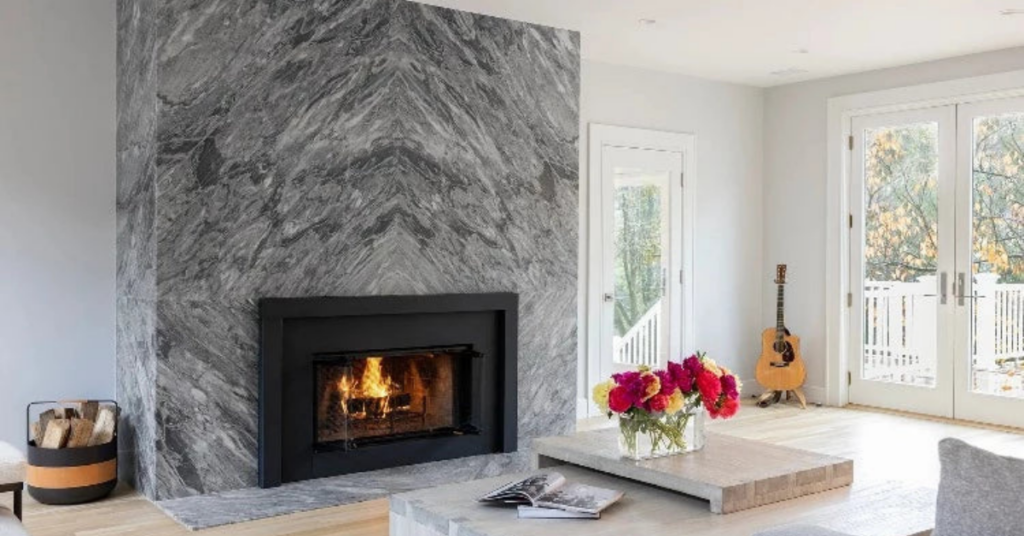
Bookmatched Stone: Artistry Through Symmetry
Bookmatching is one of the most visually impactful ways to use stone in interior design. By mirroring two adjacent slabs, designers create symmetrical veining that resembles natural artwork.
Where Bookmatching Is Used
- Kitchen backsplashes
- Waterfall islands
- Fireplace surrounds
- Feature walls
- Shower walls
Why Bookmatching Is So Popular
- It transforms stone into a focal feature
- It highlights the natural beauty of veining
- It adds a bespoke, gallery-like quality to interiors
Quartzite and marble-inspired quartz are particularly popular for bookmatching due to their dramatic veining patterns.
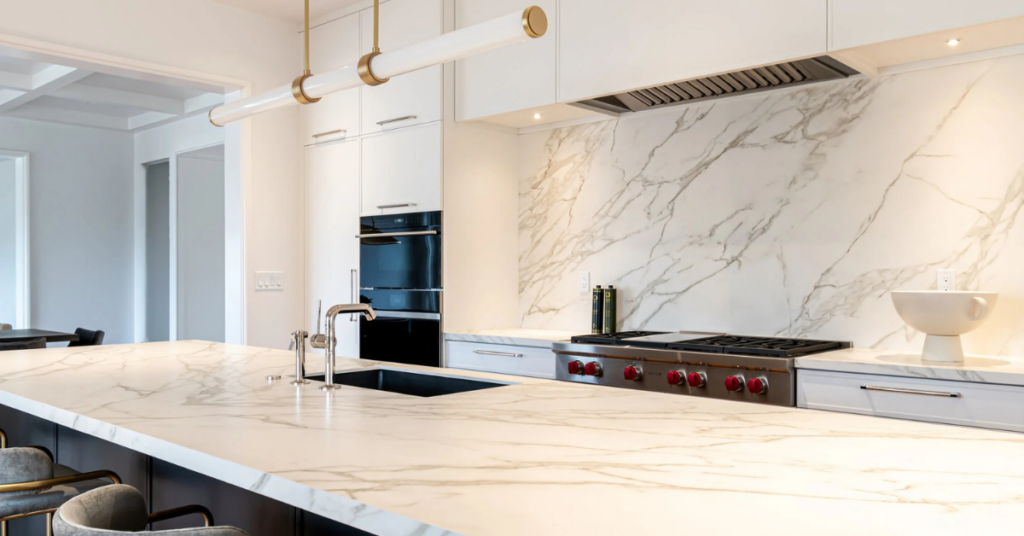
Full-Height Stone Backsplashes & Wall Applications
Rather than breaking up surfaces with tile, designers are increasingly opting for full-height stone backsplashes and vertical stone installations.
Advantages of Full-Slab Applications
- Cleaner, uninterrupted visual flow
- Fewer grout lines
- Stronger architectural presence
- Easier long-term maintenance
Popular Uses
- Kitchen backsplashes extending to upper cabinets
- Stone walls behind ranges or sinks
- Accent walls in dining or living spaces
- Fireplace surrounds with floor-to-ceiling stone
This approach works especially well in open layouts, where continuity between horizontal and vertical planes helps define zones without adding visual clutter.
Stone Fireplaces as Architectural Anchors
Fireplaces have become statement features again—and stone is leading the way.
Current Fireplace Stone Trends
- Large-format slabs with minimal joints
- Bookmatched stone for dramatic impact
- Vertical stone panels for height and scale
- Neutral stone palettes with subtle movement
Stone fireplaces offer permanence and warmth while anchoring large spaces like living rooms and great rooms. They also pair beautifully with modern furnishings, soft textiles, and warm lighting.
Mixing Stone with Other Materials
One of the most sophisticated design approaches today is mixing stone with complementary materials rather than letting it stand alone.
Popular Pairings
- Stone + natural wood (warmth and contrast)
- Stone + metal accents (brushed brass, matte black)
- Stone + glass (lightness and reflection)
- Stone + textured tile (layered depth)
For example, a stone island paired with wood cabinetry creates balance, while stone shelving set against a plaster wall adds subtle drama.
Sculptural Edges & Custom Profiles
Beyond standard eased or beveled edges, designers are embracing more expressive profiles that turn stone into a sculptural element.
Trending Edge Styles
- Fluted edges
- Mitered waterfall edges
- Thick laminated looks
- Soft-radius edges for organic interiors
These details may seem subtle, but they significantly impact how stone feels in a space—whether crisp and modern or soft and inviting.
Stone in Unexpected Places
Stone is increasingly used outside kitchens and bathrooms, expanding its role throughout the home.
Emerging Applications
- Laundry room countertops and backsplashes
- Home office desktops
- Built-in shelving
- Window sills and ledges
- Bar tops and entertainment areas
These applications bring durability and refinement to everyday spaces, reinforcing stone’s role as both practical and beautiful.
Timeless vs. Trendy: Designing with Longevity in Mind
While design trends evolve, stone remains a long-term investment. The key is choosing applications that feel current without becoming dated.
Tips for Timeless Stone Design
- Choose neutral base colors with natural movement
- Use bold veining strategically, not everywhere
- Balance statement stone with simpler finishes
- Let craftsmanship and layout lead, not just trends
Stone works best when it enhances architecture rather than overpowering it.
Why Designers Continue to Choose Stone
Interior designers consistently turn to stone because it offers:
- Durability and longevity
- Natural beauty that cannot be replicated
- Versatility across styles
- Strong resale appeal
- Endless customization potential
Whether used subtly or dramatically, stone elevates interiors in a way few materials can.
Final Thoughts
The modern use of stone in interior design goes far beyond countertops. Through fluted edges, integrated sinks, bookmatched slabs, stone-wrapped hoods, and full-wall applications, stone has become a defining element of today’s most refined homes.
As trends continue to lean toward authenticity, texture, and craftsmanship, stone remains at the forefront—bridging timeless materiality with contemporary design.
If you’re exploring ways to incorporate stone into your home, understanding these design-forward applications will help you make informed, inspired choices that stand the test of time.
Bringing These Stone Design Trends to Life at Masters Countertops
Integrated stone sinks, bookmatched slabs and stone-wrapped kitchen hoods are available at Masters Countertops. Our showroom and fabrication facility allow homeowners, designers, and builders to explore a wide range of natural stone and quartz options and turn these ideas into fully customized installations.
Whether you’re drawn to bold architectural details or subtle, timeless finishes, our team works with premium materials and precise digital layout tools to help ensure every slab, edge detail, and vertical application is executed with intention and care. From statement kitchens to refined living spaces, these modern stone trends aren’t just inspiration—they’re solutions we bring to life every day.
Like what you see? Follow us for more design inspiration, expert tips, and the latest trends in natural stone and quartz countertops. Don’t forget to share!