

Marble Countertops: A Complete Style & Care Guide
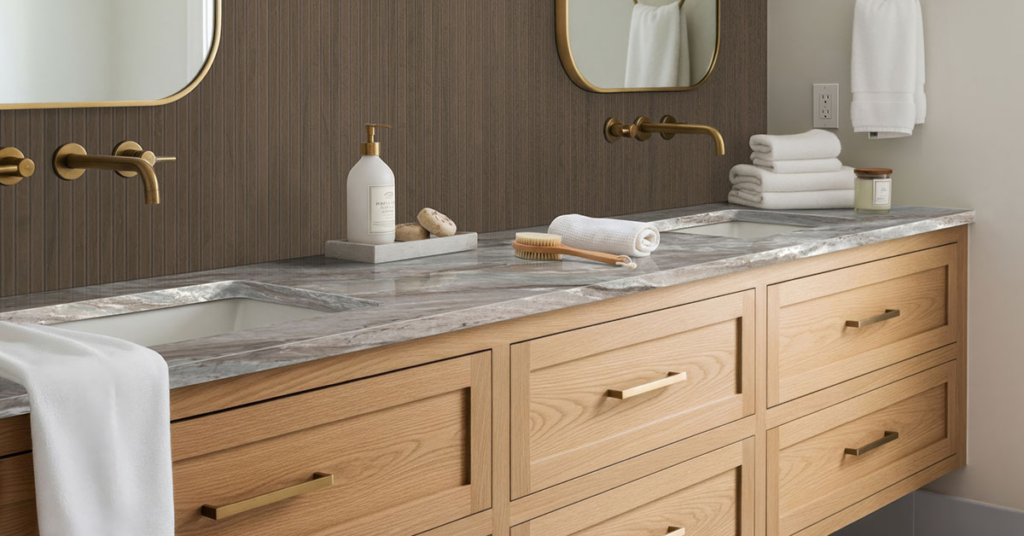
Marble has held its place in architecture and interiors for centuries, not as a passing trend but as a material that continues to evolve with each generation of design. In today’s homes, marble countertops appear in kitchens, bathrooms, and feature spaces where surface and structure come together.
What sets marble apart is not only its visual character, but the way it interacts with light, texture, and surrounding materials. Its soft veining and natural variation create depth that feels layered rather than repetitive. No two slabs are identical, which makes every installation inherently unique.
In modern interiors, marble is being used with a more intentional approach. Rather than covering entire spaces, it is often placed where it can be appreciated on islands, vanities, or vertical applications that highlight its natural movement. This balance allows marble to define a space without overwhelming it.
The Visual Language of Marble in Contemporary Spaces
Marble adapts easily to a wide range of interior styles. In classic settings, it pairs with traditional cabinetry and detailed millwork, while in more contemporary homes it complements clean lines and minimal palettes.
White and off-white marble surfaces remain the most recognized, often featuring soft gray veining that shifts subtly across the slab. These tones reflect light and contribute to a sense of openness, especially in kitchens with large windows or open layouts.
Darker marble varieties introduce contrast and depth. When paired with natural wood tones, they create a balanced composition where each material plays a distinct role. This interplay between light and dark is one of the reasons marble continues to appear in both modern and transitional interiors.
Beyond kitchens, marble vanities have become a defining feature in bathrooms. The material brings continuity between countertop, sink, and backsplash, creating a cohesive surface that reads as a single design element.
Why Marble Continues to Be Chosen
Marble is often selected for its appearance, but its appeal extends beyond visual qualities. It offers a combination of performance and presence that supports both everyday use and long-term design value.
One of its most notable characteristics is its naturally cool surface. This quality has made marble a preferred choice for baking and pastry preparation, where temperature consistency plays an important role. In kitchens where cooking is part of daily life, this feature becomes more than aesthetic—it becomes functional.
Marble also responds to its environment in a way that feels organic. Over time, subtle changes may occur as the surface interacts with use, light, and cleaning. Some homeowners see this as part of the material’s evolution, appreciating the way it develops character rather than remaining static.
Its versatility is another reason it remains relevant. Marble can be finished in polished, honed, or leathered textures, each offering a slightly different visual and tactile experience. These variations allow the material to align with different design directions without losing its identity.
Marble in Kitchens: A Balanced Approach
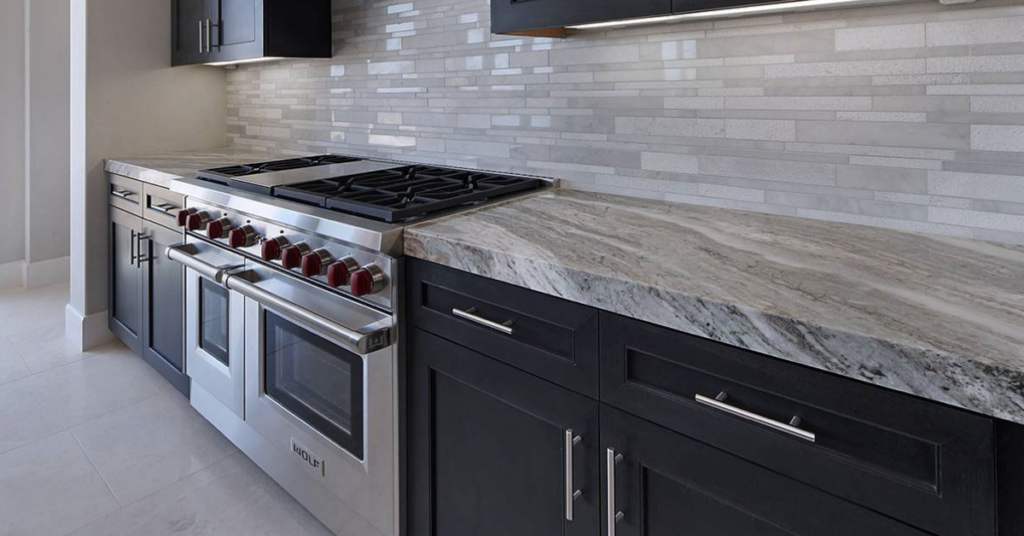
In kitchens, marble is often used selectively rather than universally. A marble island can act as a focal point, especially when paired with more durable materials such as quartz or granite on perimeter countertops.
This layered approach allows homeowners to enjoy the natural beauty of marble while maintaining practicality in high-use areas. The island becomes a central feature, while surrounding surfaces support daily cooking tasks.
Full-height marble backsplashes are another way the material is being incorporated. Extending the slab vertically reduces visual breaks and allows the veining to continue uninterrupted. This creates a sense of continuity between horizontal and vertical surfaces.
Marble is also used in combination with other materials. Wood cabinetry, brushed metal fixtures, and neutral tile finishes all complement the softness of marble without competing with it. The result is a kitchen that feels cohesive without relying on repetition.
Marble in Bathrooms: A Natural Fit
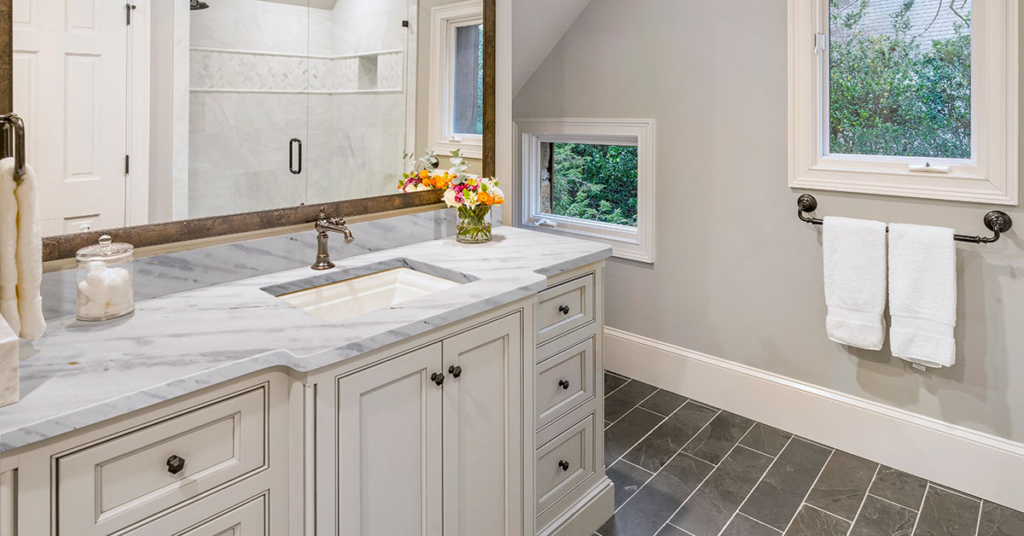
Bathrooms offer an environment where marble can be fully appreciated. Vanity countertops, integrated sinks, and wall applications allow the material to be seen up close, where its texture and variation become more noticeable.
Marble vanities are particularly well suited to both small and large bathrooms. In compact spaces, they reflect light and create a sense of openness. In larger bathrooms, they contribute to a layered, intentional design.
The use of marble in bathrooms also extends to shower walls and feature areas. When applied in large slabs, it minimizes grout lines and creates a more continuous surface. This approach aligns with the broader trend toward simplified, cohesive materials.
Understanding Marble Maintenance
Marble requires a different approach to care than engineered surfaces such as quartz. Its porous nature means it can absorb liquids if left unsealed, and certain substances can affect its surface.
This does not mean marble is difficult to maintain, but it does benefit from regular care and awareness of how it is used.
Cleaning typically involves a soft cloth and a mild, pH-neutral cleaner. Harsh chemicals or acidic solutions are avoided, as they can alter the surface over time. Wiping spills soon after they occur helps prevent staining and keeps the surface consistent.
Sealing is another part of maintenance. Depending on usage, marble is usually sealed periodically to help reduce absorption. This process is straightforward and contributes to the longevity of the material.
In kitchens, using cutting boards and avoiding direct contact with highly acidic ingredients helps preserve the surface. In bathrooms, keeping the area dry and clean prevents buildup and maintains the clarity of the stone.
Over time, marble may develop subtle variations in appearance. Many homeowners see this as part of its natural progression rather than a flaw, appreciating the way it reflects use and environment.
Marble and Everyday Living
Marble fits into daily life in ways that extend beyond aesthetics. It becomes part of routines, morning preparations at the vanity, meal preparation in the kitchen, or simply gathering around a central island.
Its presence is often felt rather than noticed. The surface becomes familiar, adapting to the rhythm of the home. This integration is one of the reasons marble continues to be selected even as new materials enter the market.
For households that prefer surfaces requiring minimal upkeep, quartz may be a better fit. For those drawn to natural variation and the character that develops over time, marble offers something distinct.
Marble Vanity Sale at Masters Countertops
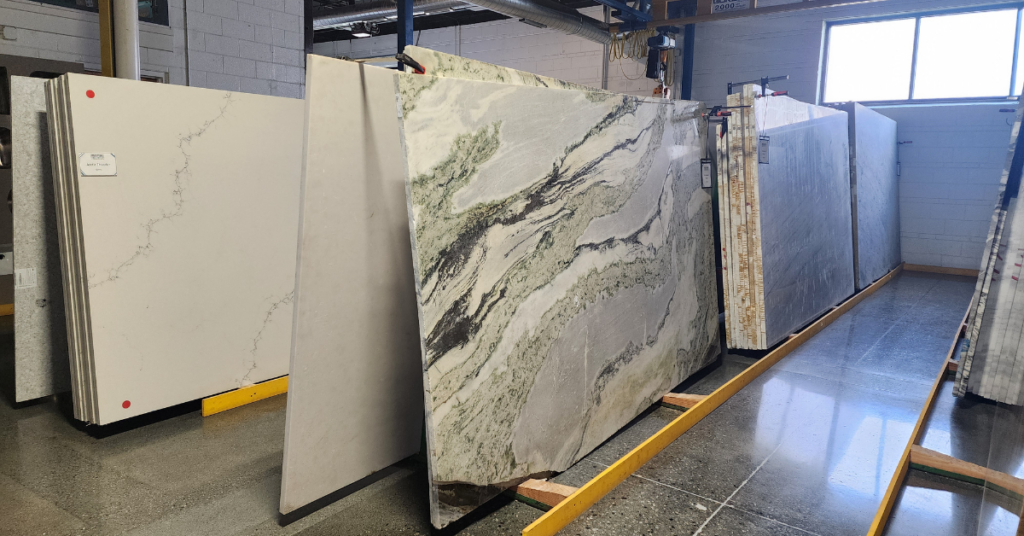
For homeowners looking to incorporate marble into their space, vanities offer an accessible starting point. At Masters Countertops, we are currently offering a selection of marble vanity countertops with sinks included, available in a range of sizes.
These vanities are designed to simplify the process. Instead of selecting individual components, the countertop and sink are already integrated, allowing for a quicker installation and a cohesive appearance.
This offering is available for pickup only, making it a convenient option for local projects or homeowners managing their own installation timelines. Quantities are limited, and selections are available while supplies last.
Marble vanities are especially well suited to bathroom updates where a full renovation is not required. Replacing a vanity top can significantly change the look of a space without altering the overall layout.
Visiting the showroom provides an opportunity to see these pieces in person, understand scale and finish, and select a size that fits your space.
Integrating Marble Into Your Home
Introducing marble into a home does not require a complete redesign. In many cases, a single surface can shift the tone of a room.
A vanity top, a kitchen island, or a backsplash can serve as a starting point. From there, additional elements can be layered gradually, allowing the design to evolve over time.
Combining marble with other materials often creates the most balanced result. Natural wood, neutral cabinetry, and simple hardware allow the stone to remain the focal point without competing elements.
Lighting also plays a role. Natural light enhances the variation within the stone, while softer interior lighting highlights texture and depth.
Final Thoughts
Marble continues to define interior spaces not because it follows trends, but because it adapts to them. Its presence can be subtle or expressive, depending on how it is used.
From kitchen islands to bathroom vanities, marble offers a surface that interacts with light, space, and daily life in a way few materials can replicate. Its ability to evolve over time adds another layer of depth, creating interiors that feel lived in rather than static.
For those considering marble, whether as a focal point or an accent, the material offers a range of possibilities that extend beyond its initial installation. With the right placement and care, it becomes part of the home’s ongoing story.
At Masters Countertops, marble is not just a material it is an opportunity to shape spaces with intention, texture, and lasting presence.
Like what you see? Follow us for more design inspiration, expert tips, and the latest trends in natural stone and quartz countertops. Don’t forget to share!