

How to Choose the Perfect Kitchen Island Size
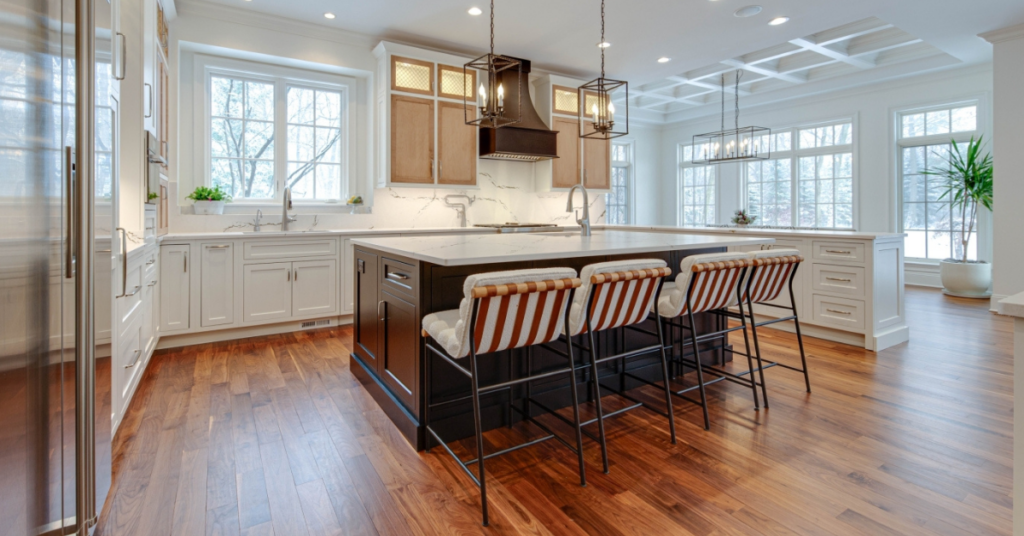
In many homes today, the kitchen island is no longer simply a work surface. It functions as a gathering place, a prep station, a casual dining area, and often the visual center of the entire room. Because it performs so many roles at once, the size and layout of an island can influence how the entire kitchen functions.
An island that is too small can feel impractical, while one that is too large may interrupt movement through the space. Achieving the right balance requires careful consideration of proportions, seating arrangements, traffic flow, and countertop overhangs.
Designers often describe the island as the element that organizes the kitchen. When the size is thoughtfully planned, it supports cooking, conversation, and everyday living without disrupting the overall layout.
This guide explores how to determine the right island dimensions, how seating influences depth and overhang, and how countertop materials and layout choices can shape the final design.
The Island as the Center of the Kitchen
Kitchen islands evolved from simple prep tables into multi-functional design features. In open-concept homes, they frequently bridge the kitchen, dining area, and living space.
This dual role—functional and architectural—means an island must serve multiple purposes at once. It should provide enough surface area for cooking preparation while also allowing comfortable seating and easy movement around the kitchen.
Proportion is essential. An island should feel anchored within the space without overwhelming the room. The goal is harmony between cabinetry, appliances, countertops, and the open floor around them.
When the size is carefully planned, the island becomes a natural gathering point where cooking, conversation, and everyday routines intersect.
Understanding Standard Island Dimensions
Although every kitchen is unique, certain guidelines help ensure an island feels balanced and practical.
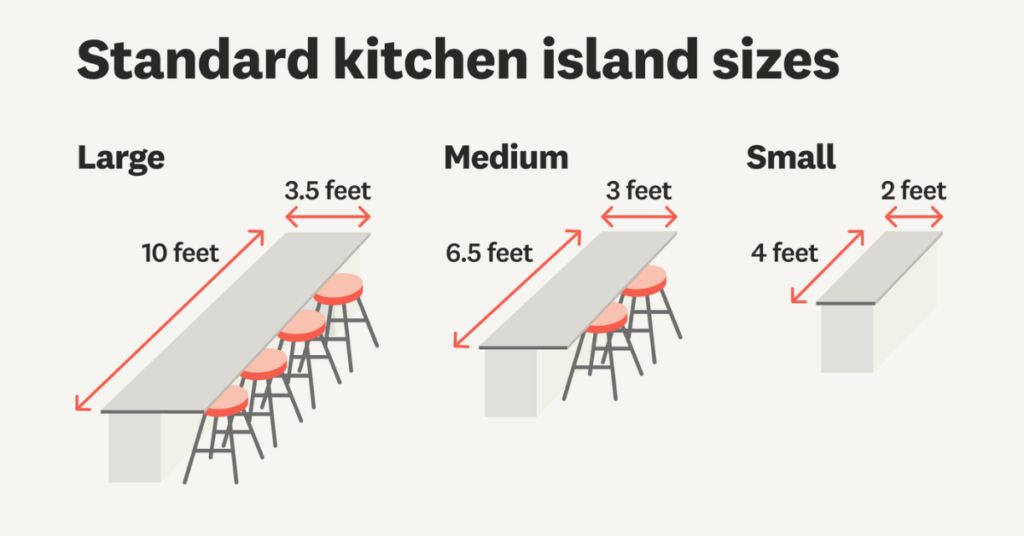
A typical kitchen island is between five and seven feet long and about three feet deep. Larger kitchens can support islands eight feet or longer, while compact kitchens may benefit from smaller designs.
Clearance around the island is equally important. Designers generally recommend at least thirty-six inches of walkway space around all sides, with forty-two to forty-eight inches providing a more comfortable circulation path in busy kitchens.
These dimensions allow appliances to open fully and give multiple people room to move comfortably during cooking or entertaining.
How Seating Influences Island Depth
Seating is one of the primary factors determining island size. Adding stools or chairs requires additional countertop depth so that legs can fit comfortably beneath the surface.
The most common seating arrangement uses a countertop overhang of around twelve inches. This depth allows stools to tuck under the island while providing enough space for knees and legs.
Some homeowners prefer a deeper overhang of fifteen to eighteen inches, especially when the island doubles as a casual dining area. This configuration allows people to sit more comfortably for longer periods.
The thickness of the countertop can also influence how seating is designed. Thicker profiles, such as mitered edges, visually support deeper overhangs while maintaining structural stability.
Planning Seating Layouts That Feel Comfortable
The number of seats an island can accommodate depends primarily on its length. Designers typically allow about twenty-four inches of width per seat to ensure people can sit comfortably without feeling crowded.
A six-foot island usually accommodates three stools, while an eight-foot island can seat four. Larger islands may support additional seating, particularly if seating wraps around multiple sides.
Seating layout also influences how people interact within the space. A straight row of stools creates a casual dining arrangement, while L-shaped seating encourages conversation across the island.
For households that frequently host guests or family gatherings, seating arrangements that allow people to face one another tend to create a more social atmosphere.
Balancing Workspace and Seating
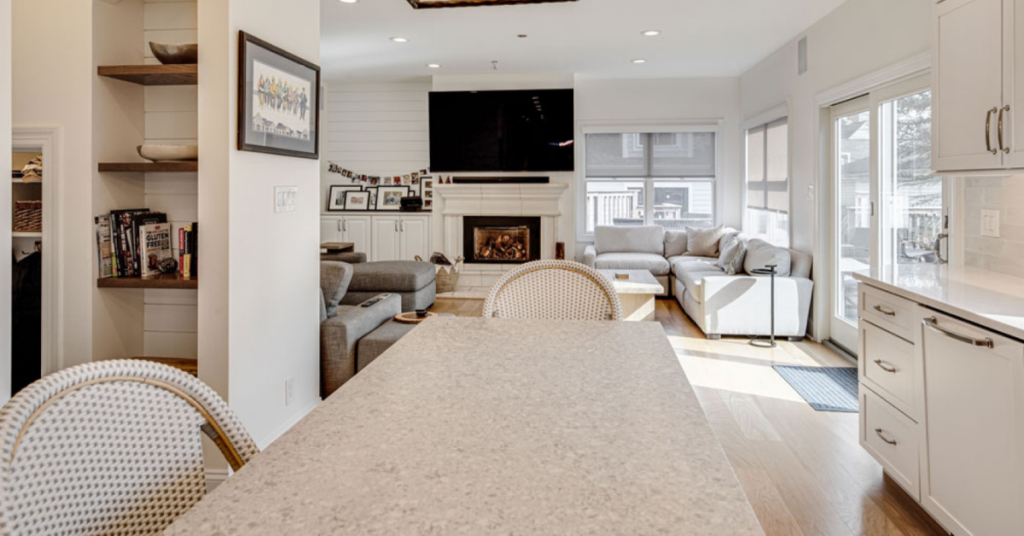
While seating is an attractive feature, the island must still function as a workspace. A surface that becomes too narrow because of seating may limit its usefulness for food preparation.
Maintaining a balance between seating and prep area is essential. Many kitchens place seating along one side of the island while reserving the opposite side for cooking tasks. This approach allows multiple activities to happen simultaneously without interfering with one another.
In larger kitchens, designers sometimes incorporate multiple zones into the island itself. One section may contain the sink or cooktop, while another serves as a serving or dining surface.
These layered layouts allow the island to support both everyday routines and social gatherings.
The Role of Countertop Overhang
Countertop overhang plays a central role in island design. Without enough overhang, seating can feel awkward or cramped. With too much overhang, structural support may become necessary.
Most stone countertops can extend about ten to twelve inches beyond the base cabinetry without additional reinforcement. Deeper overhangs often require support brackets, concealed steel supports, or structural panels.
Careful planning ensures the island remains visually clean while maintaining the necessary support for long-term durability.
Designers often integrate supports into the cabinetry or island structure so that the countertop appears to float without visible hardware.
Island Size in Open-Concept Kitchens
Open-concept kitchens have become increasingly common, and islands often play a central role in defining these spaces. Because they are visible from multiple areas of the home, their scale influences the visual balance of the entire room.
A larger island can anchor the kitchen and create a transition between cooking and living areas. When combined with waterfall edges or continuous stone surfaces, it can form a strong architectural element that visually connects adjacent spaces.
In smaller open layouts, a compact island may work better. Instead of dominating the room, it acts as a subtle divider between zones.
The key is to consider the island as part of the broader environment rather than an isolated feature.
Material Choice and Island Design
The material used for the countertop can influence how the island is perceived. Surfaces with dramatic veining or movement often become the visual highlight of the kitchen.
Quartz remains a popular option due to its durability and wide range of patterns. Granite and quartzite offer natural variation that brings depth and character to large island surfaces.
Some homeowners prefer to use the same material for both perimeter countertops and the island, creating a continuous look throughout the kitchen. Others choose a contrasting material for the island to emphasize its presence within the space.
When paired thoughtfully with cabinetry and flooring, either approach can produce a balanced design.
Waterfall Edges and Island Proportions
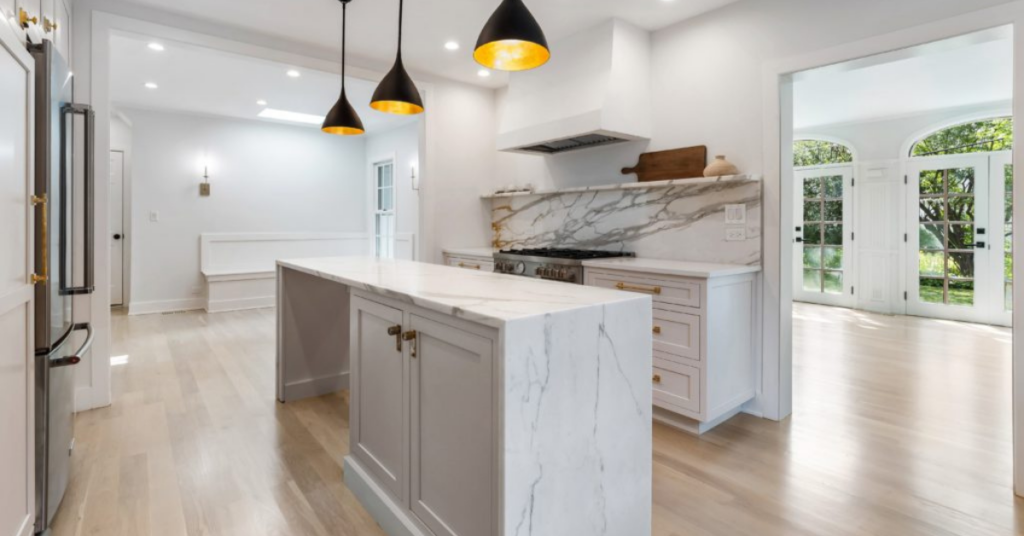
Waterfall edges, where the countertop extends vertically down the sides of the island, have become a defining feature in many contemporary kitchens.
This design element visually elongates the island and highlights the natural pattern of the stone. It can also help the island appear more integrated within the room, especially when paired with large-format slabs.
Waterfall edges work best on islands with generous proportions, where the stone surface can extend without feeling crowded by surrounding cabinetry or appliances.
In smaller kitchens, a standard edge may maintain better visual balance while still allowing the countertop material to stand out.
Lighting and Island Placement
Lighting has a significant influence on how an island functions within the kitchen. Pendant lights above the island often act as both practical illumination and decorative elements.
Proper lighting placement should align with the seating arrangement and overall island dimensions. Pendants spaced evenly across the length of the island create rhythm and draw attention to the countertop surface.
Under-cabinet lighting can further highlight the texture and pattern of the stone, especially when paired with honed or leathered finishes that respond softly to light.
Lighting choices often reinforce the island’s role as a gathering space within the kitchen.
Island Design in Smaller Kitchens
Not every kitchen can accommodate a large island, but smaller spaces can still benefit from carefully planned layouts.
Compact islands often function more like workstations, providing additional storage and prep space without adding seating. In some cases, narrow islands allow seating for two stools while maintaining adequate walkway clearance.
Designers sometimes incorporate rolling islands or movable worktables in tight kitchens. These flexible solutions offer additional workspace when needed while preserving circulation space.
Even in modest kitchens, the right island size can improve efficiency and visual balance.
Long-Term Considerations
Choosing the right island size involves more than immediate needs. Homeowners often consider how the kitchen will be used in the future.
A household that frequently entertains may prioritize seating and gathering space. Families with young children might focus on durable materials and comfortable seating arrangements.
Resale value can also influence island design. Kitchens with well-proportioned islands and seating are often appealing to future buyers because they support modern lifestyles centered around shared spaces.
Planning with both present and future use in mind helps ensure the island remains functional and visually balanced for years to come.
Bringing the Island Concept to Life
Selecting the right island size involves thoughtful planning, careful measurements, and attention to how the space will be used daily. From seating arrangements to countertop overhangs, each decision shapes how the kitchen feels and functions.
At Masters Countertops, homeowners can explore a wide range of stone and quartz materials that complement island designs of every size. Seeing slabs in person allows clients to understand scale, pattern movement, and edge profiles before installation begins.
When combined with precise measurements and skilled fabrication, the result is an island that works naturally within the space and enhances the overall design of the kitchen.
Final Thoughts
The kitchen island continues to evolve as one of the most important features in modern homes. Its size influences everything from daily routines to the visual rhythm of the kitchen.
By considering proportions, seating arrangements, countertop overhang, and material selection, homeowners can create an island that feels balanced and inviting without overwhelming the space.
Thoughtful design transforms the island from a simple countertop into a central element of the home—supporting cooking, gathering, and everyday living with ease.
If you’re planning a new kitchen island or rethinking the layout of your current space, the team at Masters Countertops is here to help bring the design together. Visit our showroom to explore a wide selection of stone and quartz surfaces, see full slabs in person, and get guidance on island sizing, seating overhangs, and material choices that work beautifully within your kitchen layout. From selecting the right stone to precise fabrication and installation, our team helps turn well-planned ideas into finished spaces that feel balanced, functional, and thoughtfully designed.
Like what you see? Follow us for more design inspiration, expert tips, and the latest trends in natural stone and quartz countertops. Don’t forget to share!