

Solid Color Quartz vs. Calacatta Quartz
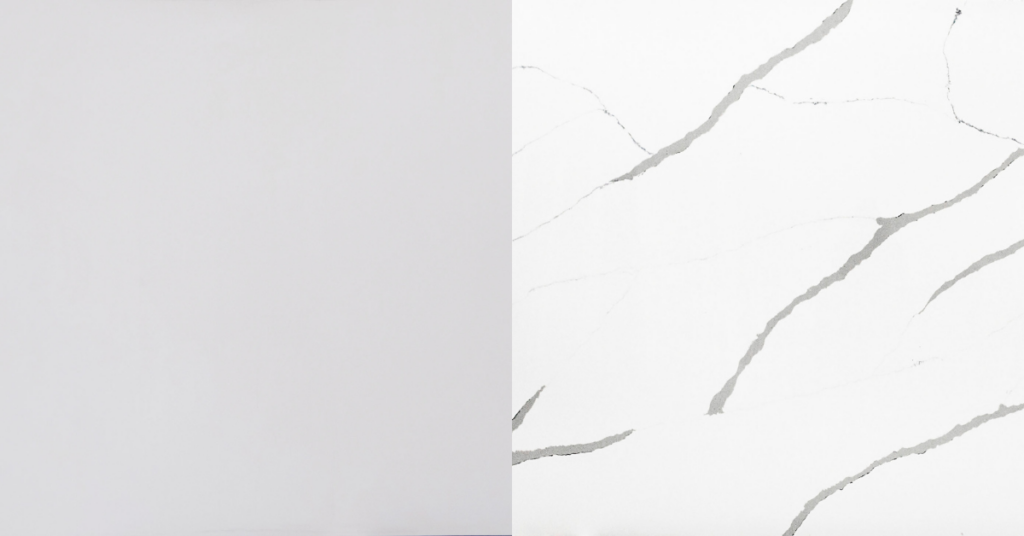
Quartz has steadily become one of the defining materials in modern interiors, not only for its durability but for its ability to adapt to different design directions. In kitchens, bathrooms, and open-concept spaces, quartz surfaces are no longer just practical—they shape how a room feels, how light moves across it, and how different elements connect.
Among the many options available today, two distinct styles continue to lead: solid color quartz and Calacatta-inspired quartz. Each offers a different visual language. One leans toward simplicity and continuity, while the other introduces movement and contrast through veining.
Understanding the difference between these two approaches is less about choosing what is better and more about deciding what aligns with the space you are creating.
Quartz as a Modern Surface Material
Quartz is engineered using natural quartz combined with resins and pigments, resulting in a material that is both durable and consistent in appearance. This process allows for a wide range of colors and patterns, from completely uniform tones to designs that replicate natural stone.
One of the defining characteristics of quartz is its non-porous surface. Unlike natural stone, it does not absorb liquids, which means it resists stains and does not require sealing. This makes it a reliable option for kitchens and bathrooms where daily use is constant.
Quartz also maintains a consistent look from slab to slab, which is especially important in larger projects or open-concept layouts. This predictability allows designers and homeowners to plan spaces with confidence, knowing the final installation will match the original vision.
Within this category, the choice often comes down to whether you prefer a surface that feels calm and uniform or one that introduces movement and contrast.
The Appeal of Solid Color Quartz
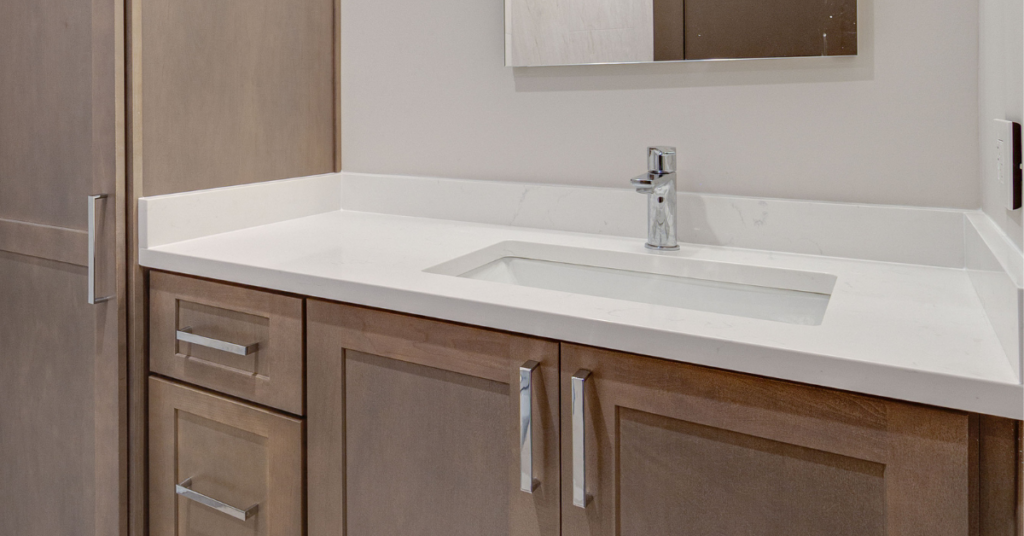
Solid color quartz represents a quieter approach to design. It focuses on clarity, continuity, and subtlety rather than visual contrast.
In kitchens, solid tones such as white, soft gray, charcoal, or beige create a clean foundation that allows cabinetry, hardware, and lighting to take on a more defined role. These surfaces are often chosen in spaces where the goal is balance rather than visual emphasis.
Because solid quartz lacks heavy veining, it works especially well in modern interiors where lines are clean and materials are layered with intention. It also performs well in smaller kitchens or bathrooms, where too much pattern can feel overwhelming.
Another advantage of solid quartz is how it interacts with light. Without veining interrupting the surface, light moves evenly across the countertop, creating a consistent visual plane. This can make spaces feel more open and organized, particularly in rooms with limited natural light.
Where Solid Quartz Works Best
Solid quartz tends to integrate seamlessly into a wide variety of spaces. In kitchens, it is often used across both perimeter countertops and islands to create a unified look.
In bathrooms, it provides a clean surface that pairs well with a range of vanity styles, from floating cabinets to more traditional configurations. Its consistent appearance makes it easier to coordinate with tile, paint, and fixtures.
Solid quartz also performs well in secondary spaces such as laundry rooms, mudrooms, and home offices. In these areas, durability and ease of maintenance are often just as important as design.
Because quartz resists stains, scratches, and moisture, it remains one of the most practical materials for high-use environments.
At Masters Countertops, in-stock solid quartz options include a range of tones that support both contemporary and transitional designs. These surfaces are often selected for projects where simplicity is part of the overall design direction.
Solid Quartz in Practice: In-Stock Options at Masters Countertops
Solid color quartz becomes especially compelling when viewed in real space, where tone, lighting, and surrounding materials come together. At Masters Countertops, several in-stock options reflect how versatile this category can be, offering surfaces that range from bright and minimal to deep and grounding.
Fresh White Quartz is one of the clearest expressions of a neutral quartz surface. Its consistent white tone allows it to blend into a space without competing with cabinetry, hardware, or flooring. This type of surface is often selected for kitchens where continuity is preferred, or in bathrooms where light reflection helps open up smaller layouts. Its uniform appearance creates a quiet backdrop that supports the overall composition rather than drawing attention away from it.
At the opposite end of the spectrum, Midnight Black Quartz introduces depth through a rich, uninterrupted black surface. It works particularly well in contrast-driven kitchens, where lighter cabinetry or wood tones create balance against the darker countertop. Because of its solid color, it maintains a clean visual line while still anchoring the space with presence.
Between these two extremes sits Carrara Blanco Quartz, which offers a subtle transition between solid and veined surfaces. Its white background is paired with soft gray veining that moves gently across the slab, creating visual interest without overwhelming the design. This makes it a versatile choice for homeowners who want a hint of movement while maintaining a restrained palette.
These options, along with other in-stock quartz selections at Masters Countertops, highlight how solid and lightly veined surfaces can adapt to different interiors. Whether the goal is clarity, contrast, or a balance between the two, the material becomes part of the larger design conversation rather than a standalone feature.
Calacatta Quartz: Movement and Contrast
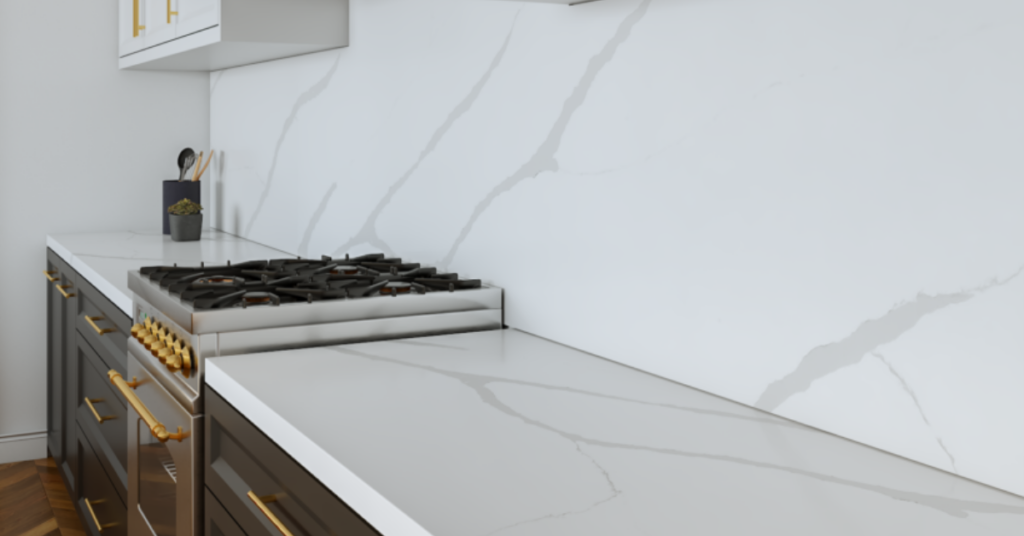
Calacatta quartz takes a different approach. Instead of uniform color, it introduces veining inspired by natural marble. These patterns range from soft, flowing lines to bold, high-contrast movement across the slab.
This style is often used when the countertop is meant to be more than just a surface. It becomes a focal point within the space, drawing attention and creating visual depth.
Calacatta quartz is engineered to mimic the look of marble while offering improved durability. Unlike natural marble, it resists staining and does not require sealing, making it more suitable for kitchens and high-use areas.
The veining in Calacatta quartz is carefully designed to feel natural rather than repetitive. In larger applications such as islands or backsplashes, this movement creates a sense of continuity that can extend across multiple surfaces.
The Role of Calacatta Quartz in Kitchen Design
In kitchens, Calacatta quartz is often used to define the island. The contrast between the veining and the background color draws attention to the center of the space, especially in open layouts.
When paired with neutral cabinetry, the countertop becomes a visual anchor. In darker kitchens, lighter Calacatta surfaces can balance the overall composition and reflect light back into the room.
Waterfall edges are frequently used with Calacatta quartz to extend the veining vertically. This allows the pattern to continue down the sides of the island, creating a more cohesive and intentional look.
Backsplashes are another area where Calacatta quartz is often featured. Extending the same slab from the countertop to the wall creates a seamless transition that emphasizes the material rather than breaking it into smaller sections.
Calacatta Quartz in Practice: In-Stock Options at Masters Countertops
Calacatta quartz takes on its full impact when viewed as a complete slab, where veining flows naturally across the surface rather than appearing as a small sample. At Masters Countertops, several in-stock Calacatta options demonstrate how varied this category can be, offering different interpretations of movement, contrast, and scale.
Calacatta Gray Vein Quartz presents a bright white surface crossed by bold gray veining that moves with a sense of direction across the slab. The contrast is noticeable without feeling rigid, making it adaptable to both traditional and modern kitchens. It’s often selected for islands or full-height backsplashes where the veining can extend uninterrupted and become part of the overall layout.
Calacatta Naples Quartz features a crisp white background layered with distinctive gray veining and subtle pebble-like patterns that add visual texture across the surface. The design feels balanced yet expressive, capturing the character of natural marble while offering the durability and easy maintenance associated with quartz.
Calacatta Belleza Quartz features a bright white background accented by bold, dynamic veining in shades of brown and gray. The pattern brings movement and contrast to the surface, echoing the look of Calacatta marble while maintaining a balanced composition that integrates easily into both kitchens and bathrooms.
Together, these in-stock options reflect how Calacatta quartz can shift from bold to subtle depending on the pattern and scale of the veining. Whether used as a statement island, a full-height backsplash, or paired with solid quartz on perimeter countertops, these materials offer flexibility in how a space is defined.
Comparing Solid Quartz and Calacatta Quartz
The decision between solid color quartz and Calacatta quartz often comes down to how you want the space to feel.
Solid quartz provides a quiet foundation. It allows other elements to stand out and keeps the overall design restrained. It works well in spaces where continuity and simplicity are priorities.
Calacatta quartz introduces movement and contrast. It becomes part of the visual story of the room, guiding the eye and creating focal points.
Both options offer the same performance benefits. They are durable, non-porous, and easy to maintain. The difference lies in how they influence the overall design.
Mixing Both Styles in One Space
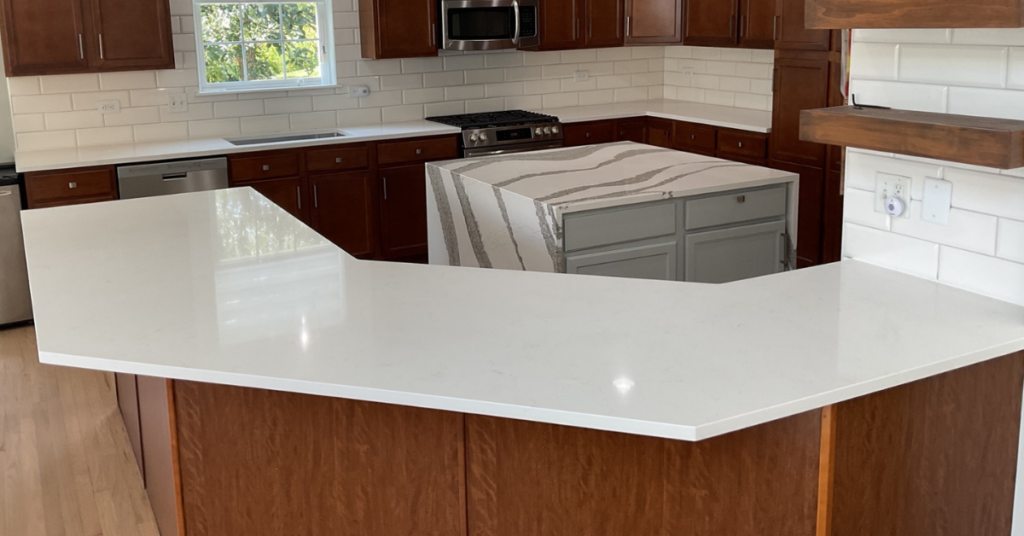
Many modern kitchens combine both solid quartz and Calacatta quartz within the same layout. This approach allows for variation without losing cohesion.
A common strategy is to use Calacatta quartz on the island and solid quartz on perimeter countertops. The island becomes the central feature, while the surrounding surfaces remain more understated.
This layered approach works particularly well in open-concept homes, where the kitchen is visible from multiple angles. It creates a sense of depth without overwhelming the space.
The key is maintaining balance. The materials should complement each other rather than compete for attention.
Maintenance and Everyday Use
One of the reasons quartz remains a leading choice is its ease of maintenance. Unlike natural stone, it does not require sealing and can be cleaned with mild soap and water.
Because it is non-porous, it resists staining from common household substances such as coffee, wine, and oils. This makes it particularly well suited for kitchens where spills are part of daily use.
Quartz is also resistant to scratches and general wear, allowing it to maintain its appearance over time.
However, like all materials, it benefits from basic care. Using cutting boards and avoiding direct contact with high heat helps preserve the surface.
Designing with In-Stock Quartz Options
One of the advantages of working with in-stock quartz is the ability to see the material in person before making a decision. Viewing full slabs provides a clearer understanding of color, pattern, and scale.
At Masters Countertops, a wide range of solid and Calacatta quartz options are available in stock, allowing for quicker turnaround times and more predictable results.
This accessibility also allows homeowners to explore different styles side by side. Comparing solid tones with veined surfaces in the same environment can make the decision process more intuitive.
Bringing the Design Together
Choosing between solid color quartz and Calacatta quartz is ultimately about how you want your space to function and feel.
Some kitchens benefit from the quiet consistency of solid surfaces, while others come to life through the movement of veined stone-inspired designs. In many cases, combining both creates the most balanced result.
What remains consistent across both options is performance. Quartz continues to offer durability, ease of maintenance, and design flexibility that aligns with modern living.
Final Thoughts
Quartz continues to shape how kitchens and bathrooms are designed, offering a range of possibilities that extend from minimal to expressive.
Solid color quartz provides clarity and continuity. Calacatta quartz introduces movement and contrast. Both bring durability and ease of use into everyday spaces, supporting how people live rather than complicating it.
At Masters Countertops, these materials are not just samples, they are available, in stock, and ready to be part of your next project. Seeing them in person allows you to understand how each surface interacts with light, cabinetry, and the overall layout of your home.
The decision is not simply about choosing a countertop. It is about selecting a surface that aligns with the way your space is used, experienced, and lived in over time.
Like what you see? Follow us for more design inspiration, expert tips, and the latest trends in natural stone and quartz countertops. Don’t forget to share!