

Quartz Countertop Stains That Won’t Come Out — and How to Prevent Them
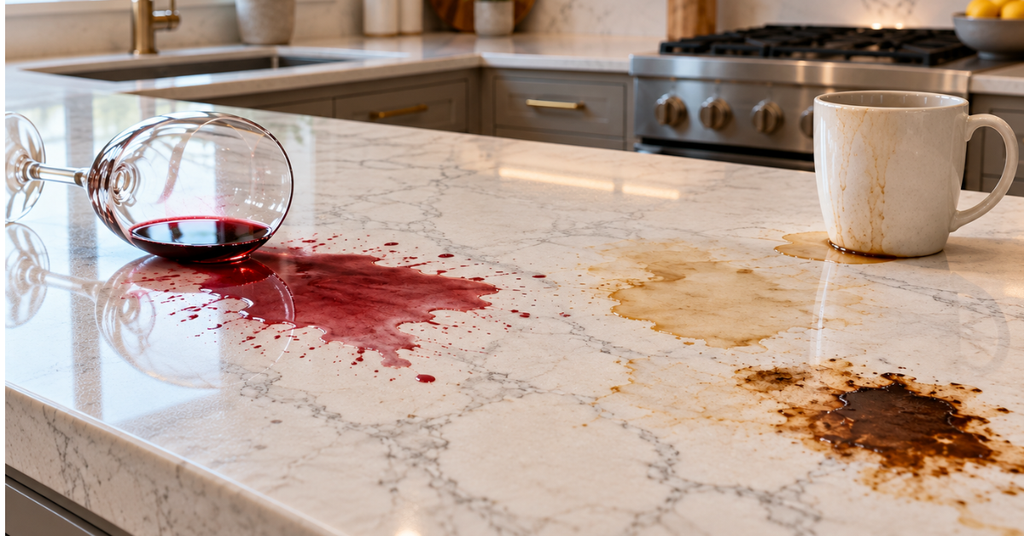
Quartz countertops are marketed as virtually maintenance-free, and for the most part, that reputation is earned. They’re non-porous, they don’t need sealing, and everyday spills, coffee, juice, wine, wipe up without leaving a trace if you catch them in time.
But “virtually maintenance-free” isn’t the same as indestructible. There’s a specific category of stains and discoloration that quartz is genuinely vulnerable to, and most homeowners don’t find out about them until they’re already staring at a mark that won’t come out. Turmeric left on the surface overnight. A permanent marker from a kid’s homework project. A bottle of hair dye on a bathroom vanity. A cutting board shifted to reveal a pale ring from years of sitting in the same spot near a sunny window.
These aren’t urban legends. They’re the calls and messages we get from homeowners who thought their quartz was impervious to everything. Here’s what you actually need to know.
Can Quartz Countertops Stain Permanently?
Yes, certain substances can permanently discolor quartz, particularly highly pigmented materials, harsh chemicals, and prolonged UV exposure. These are different from everyday stains and require more than routine cleaning to address.
Quartz’s non-porous surface means most liquids can’t penetrate the stone the way they would with granite or marble. But “non-porous” doesn’t mean the surface is chemically inert. The resin binders that hold engineered quartz together can react with highly alkaline or acidic substances, and strongly pigmented materials can bond to the surface itself rather than sitting on top of it waiting to be wiped away.
The result is a category of stains that don’t respond to soap and water, and sometimes don’t respond to anything at all. Understanding which substances cause them, and why, is the first step toward keeping your quartz looking the way it did on installation day.
What Substances Cause Permanent Stains on Quartz?
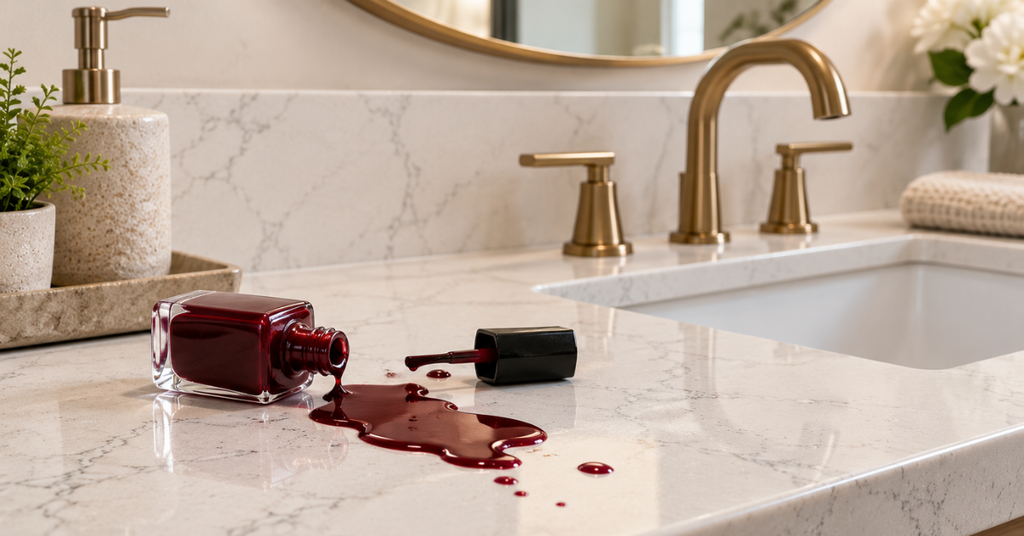
Turmeric, permanent markers, hair dye, bleach, and prolonged sun exposure are the most common causes of stains that either won’t come out or cause irreversible discoloration.
Turmeric is the most notorious quartz stain, and for good reason. The curcumin compound that gives turmeric its intense yellow color is one of the most potent natural dyes known, it’s used industrially to color textiles. Left on a quartz surface for even a few hours, it can bond deeply enough that standard cleaners won’t touch it. Lighter quartz colorways are especially vulnerable because the yellow shows so starkly against a white or cream background.
Permanent markers and ink present a similar problem. The solvents and dyes in permanent markers are designed to bond to surfaces, that’s the point of them. On quartz, they can soak into the surface texture and resist everything short of acetone or nail polish remover, and even those don’t always work completely if the mark has had time to set.
Hair dye is a significant risk on bathroom quartz vanities. Most hair dyes are formulated with powerful pigments and developers that react chemically with surfaces. A drip of dark brown or black dye left on a quartz vanity while you’re waiting for your color to process can leave a mark that no cleaning product will fully remove.
Bleach and high-pH cleaners cause a different kind of damage. Rather than staining the surface with color, they can break down the resin in the quartz, causing permanent lightening, dullness, or a bleached-out patch that disrupts the surface’s uniform appearance. This is one of the reasons we always caution against using bleach-based sprays or oven cleaners anywhere near quartz.
UV exposure and sunlight cause gradual discoloration over time, particularly in lighter quartz. Quartz installed near large south- or west-facing windows can yellow or fade unevenly in areas that receive direct sun, while the areas under appliances or cutting boards stay their original color. This isn’t a stain in the traditional sense, it’s photodegradation of the resin, but the result is the same: discoloration that can’t be reversed.
Can You Remove Stubborn Stains from Quartz?
Some stubborn stains can be reduced or removed with the right approach, but truly set stains from turmeric, hair dye, or bleach damage are often permanent. Acting quickly and using the right products makes the biggest difference.
For stains that haven’t fully set, a few approaches are worth trying before you accept the damage as permanent:
For turmeric and heavy pigmentation: Apply a small amount of acetone (nail polish remover) to a white cloth and dab, don’t scrub, the stained area. Let it sit for 30 to 60 seconds, then wipe clean and rinse thoroughly with water. This works best when the stain is relatively fresh. For older turmeric stains, a paste of baking soda and water left on the surface for 15 to 20 minutes can help lift some of the pigment before following up with acetone.
For permanent marker: Isopropyl alcohol (rubbing alcohol) is the first thing to try. Apply it to a cloth and work from the outside of the mark inward to avoid spreading it. Acetone is a stronger option if alcohol doesn’t work. Test both in an inconspicuous area first, as some quartz finishes can be affected by solvents.
For hair dye: Act immediately, the longer hair dye sits, the deeper it bonds. Rinse the area with water right away, then apply a non-bleach bathroom cleaner formulated for stone surfaces. If a mark remains, acetone is your best option, again working carefully and testing first.
For bleach damage: There is no fix. Bleach damage to quartz resin is chemical and permanent. The affected area may need professional resurfacing or, in severe cases, slab replacement. This is worth knowing before you ever reach for a bleach spray near your quartz.
How Do You Prevent Stains on Quartz Countertops?
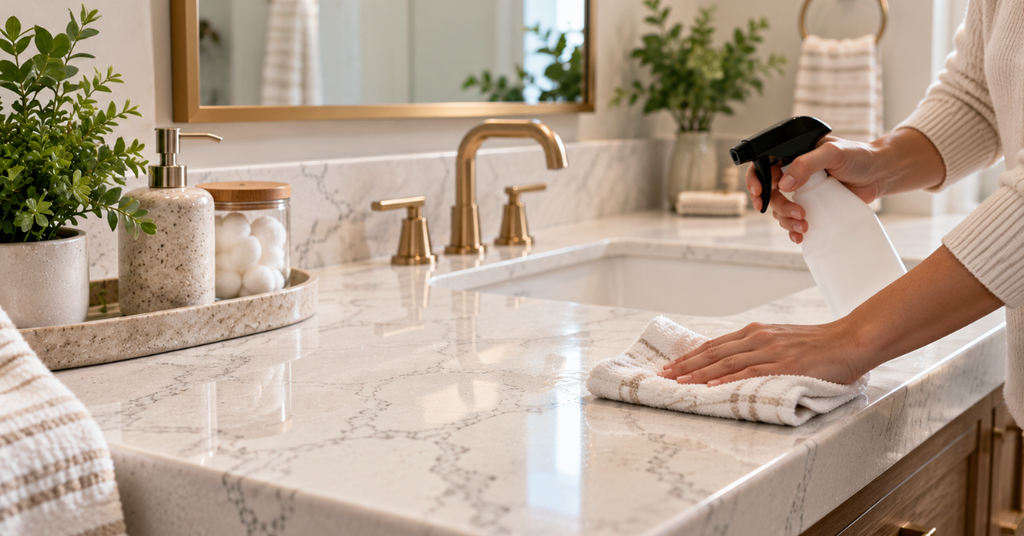
The most effective prevention is speed. Wiping up spills immediately, avoiding known problem substances near quartz surfaces, and protecting the surface from direct sunlight and heat.
Quartz’s non-porous surface gives you a window of time that granite doesn’t. Most staining agents need time to bond or react, which means a spill that’s wiped up within a few minutes is unlikely to leave a permanent mark. The problems happen when spills are left, while you finish cooking, step away to answer the door, or simply don’t notice the drip behind a canister on the counter.
A few practical habits that make a real difference:
- Never leave turmeric, beet juice, or strongly pigmented food on quartz overnight. If you cook with these ingredients regularly, wipe down the surface before you leave the kitchen.
- Keep hair dye, nail polish, and acetone away from quartz vanities during use. Place a towel or protective mat under anything that could drip.
- Avoid bleach-based cleaners, oven cleaners, and drain cleaners near quartz surfaces. For daily cleaning, a pH-neutral dish soap and warm water is all you need. A dedicated quartz cleaner is a worthwhile investment for weekly maintenance.
- If your quartz is in a sun-exposed location, consider whether window film or treatments could reduce direct UV exposure on the surface over time.
Thinking About New Quartz Countertops?
If you’re dealing with a stain that won’t come out and weighing whether repair is worth it versus replacement, or if you’re planning a new kitchen or bathroom and want to choose a quartz that fits your lifestyle, come talk to our team at Masters Countertops.
We carry a wide selection of quartz slabs in Wheeling, IL, and we can walk you through which colorways and finishes tend to be most forgiving for high-use kitchens and busy households. Lighter quartz in a turmeric-heavy kitchen needs a different conversation than a dark charcoal surface in a bathroom.
Use our Instant Quote tool to get a project estimate sent to your inbox, or book a showroom visit to see our quartz selection in person.
Masters Countertops 363 Alice Street, Wheeling, IL 60090 Monday–Friday 9am–5pm | Saturday 9am–3pm masterscountertops.com
Like what you see? Follow us for more design inspiration, expert tips, and the latest trends in natural stone and quartz countertops. Don’t forget to share!